
Best of Ethiopia - 12 Nights 13 Days
Activities
Best of Ethiopia - 12 Nights 13 Days
Addis Ababa, Lake Tana, Gondar, Simien Mountains, Lalibela and the Omo Valley
Duration 13 Days

Best of Ethiopia – 12 nights / 13 days combining Ethiopia’s historic northern circuit with the peoples and markets of the Omo Valley.
Highlights
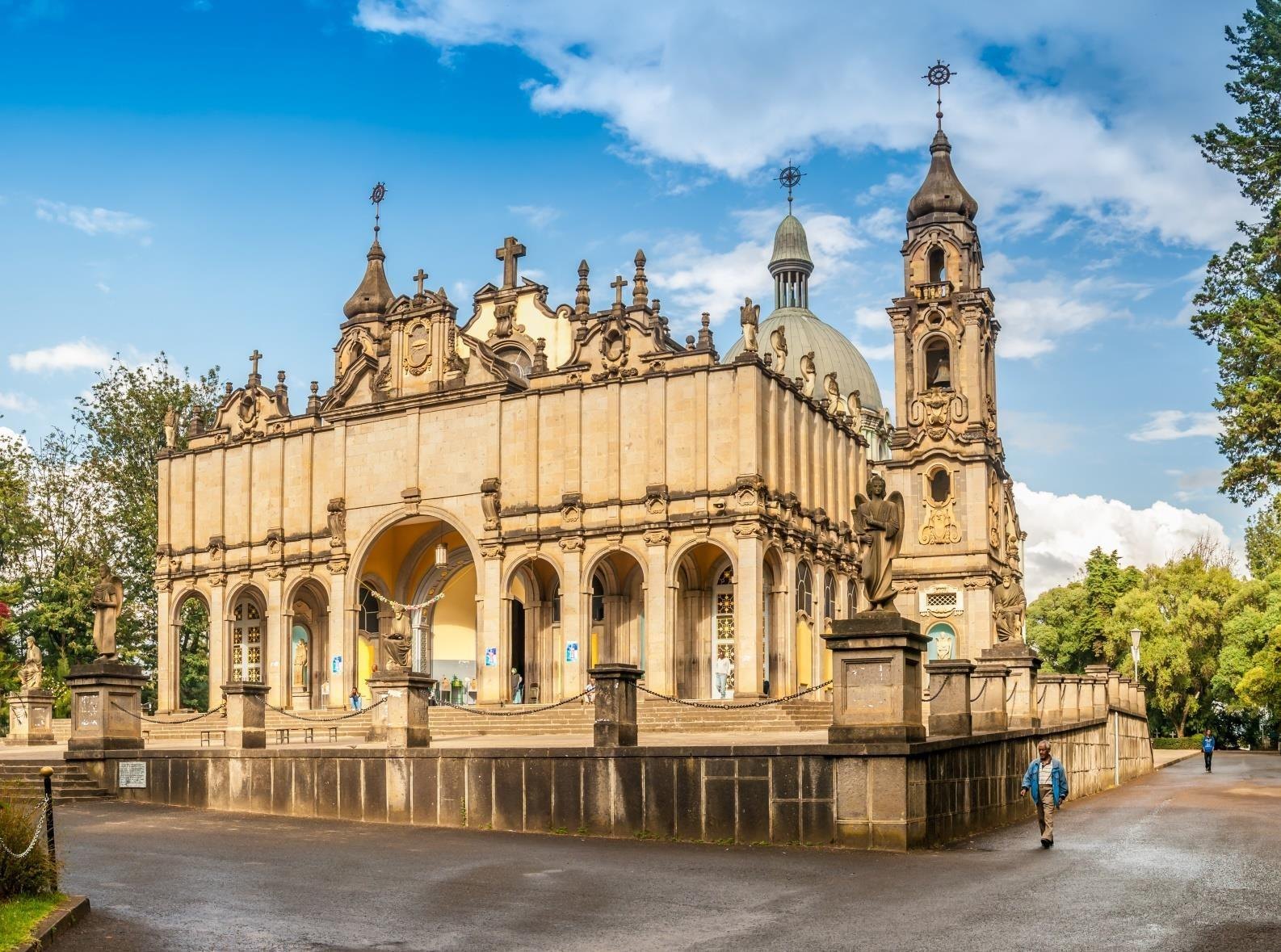
- Visiting Addis Ababa, often referred to as “the political capital of Africa” for its historical, diplomatic and political significance for the continent, including the National Museum, St. George Cathedral, Entoto Mountain & Merkato.
- The magnificent Blue Nile Falls, and Lake Tana Monasteries.
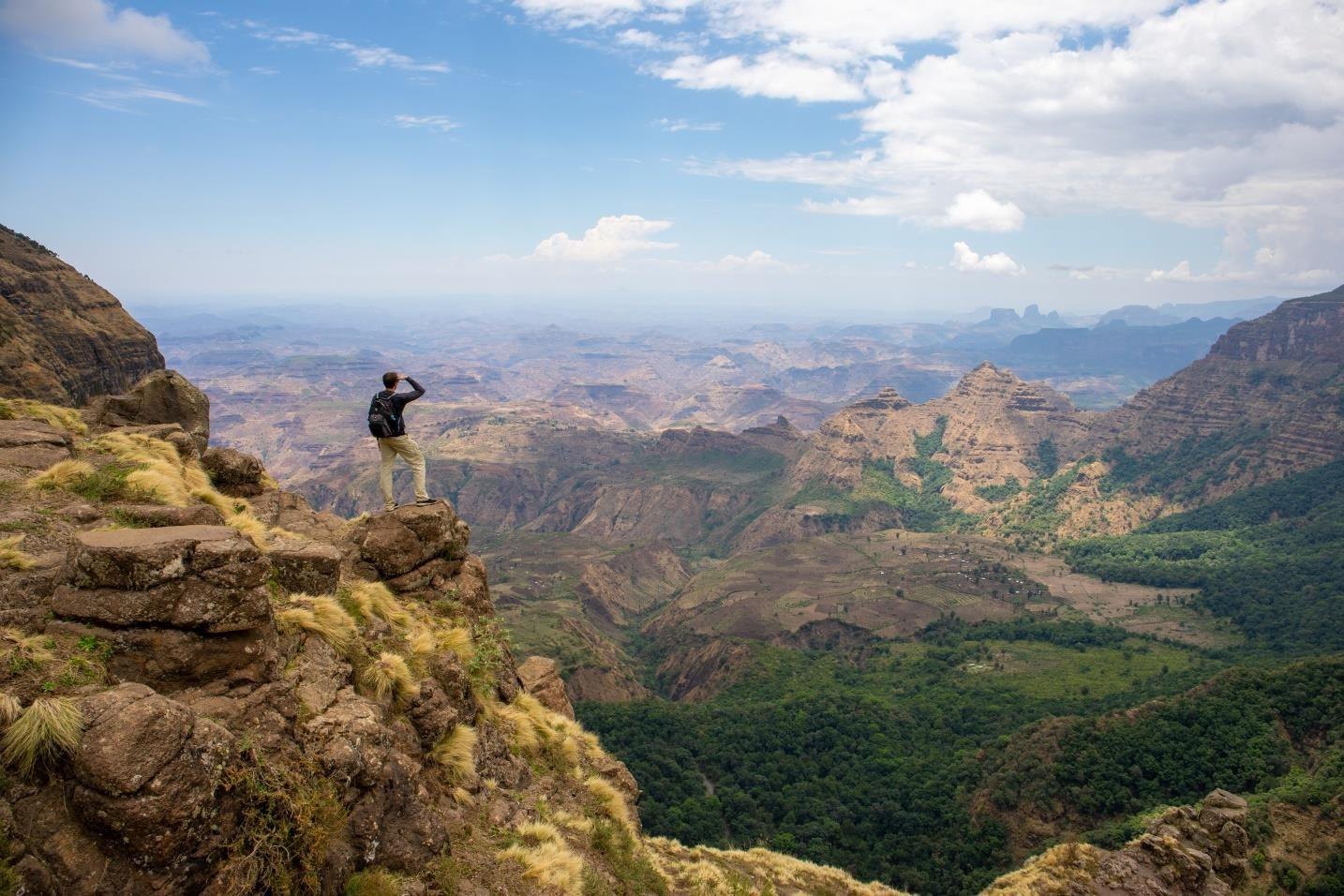
- Explore the wildlife and landscape of the Simien Mountains & the city of Gondar.
- Touring through the vivid frescoes of Lalibela’s rock-hewn churches.
- Visit the local villages down the Omo Valley and meet with elders.
Overview
This program includes history, culture, religion, different social activities, scenery and wildlife. Discovering the mysteries of Ethiopia, a land of deep traditions dating back more than 3,000 years, includes the ancient cultural artefacts found in Lalibela, Gondar & Bahir Dar with the unspoiled nature of the Simien Mountains National Park.
Discover the incredible number of different ethnic groups in and around the Omo Valley. Explore their villages, learn about local customs and wander through bustling markets on a specific day of the week: Monday – Kako Market at Jinka or Turmi Market at Turmi village; Tuesday – Dimeka Market at Turmi village / Dorze market at Chencha; Thursday – Key Afer Market at Key Afer village; Saturday – Dimeka Market at Turmi village / Dorze market at Chencha; Sunday – Weito Market at Erbore village.
Along the Omo River a variety of different ethnic groups are found, such as the Tsemay, Arbore, Hamer, Galeb (Dasenech), Karo, Benna, Ari, Mursi, Bume (Nyangatom), Bodi and Surma, whose contact with the modern world has come only within the last two to three decades. The Omo, flowing for nearly 1000 km from the highlands south west of Addis Ababa to Lake Turkana in Kenya, provides excellent opportunities for white water rafting.
Your safari at a glance
| Day | Accommodation | Meals |
|---|---|---|
| Day 1: Addis Ababa | Ramada Addis | – |
| Day 2: Fly Addis - Bahirdar | Avanti Blu Nile Resorts | Full Board |
| Day 3: Drive Bahir Dar to Gondar | Haile Resort Gondar | Full Board |
| Day 4: Excursion to Simien Mountains | Haile Resort Gondar | Full Board |
| Day 5: Fly Gondar to Lalibela | Mezena Lodge | Full Board |
| Day 6: Lalibela | Mezena Lodge | Full Board |
| Day 7: Fly Lalibela – Addis Ababa | Ramada Addis | – |
| Day 8: Fly Addis Ababa – Jinka | Eco Omo Lodge | Full Board |
| Day 9: Drive Jinka – Mursi – Turmi | Buska Lodge | Full Board |
| Day 10: Drive Turmi – Karo – Turmi | Buska Lodge | Full Board |
| Day 11: Drive Turmi – Arbaminch | Haile Resorts | Full Board |
| Day 12: Fly Arbaminch – Addis Ababa | Ramada Hotel | Full Board |
| Day 13: A Day in Addis and Departure | – | – |
Full Board = breakfast, lunch and dinner
Itinerary
Day 1: Addis Ababa
Welcome to Addis Ababa. On your arrival at Addis Ababa Bole International Airport, after clearing immigration and customs welcome by Gemsbok Safaris staff and get transferred to your hotel. Addis Ababa is the largest city of Ethiopia and its capital city at the same time. Addis Ababa, which in Amharic means "a new flower”, is located in the center of the country, 2100- 2300m above the sea. It is one of the highest-located capital cities in the world. Addis Ababa is a pleasant city with interesting museums and one of the largest open-air markets in Africa, “Mercato”. Addis Ababa is Africa’s diplomatic capital with headquarters for the Organization of African Unity and the United Nation Economic Commissions for Africa. Based on your flight time the sightseeing of Addis can be arranged which you will commence with a visit to the National Archaeological Museum; ranks among the most important museums in sub-Sahara Africa. It housed the 3.5-million-year-old bones of Lucy. Lucy is believed to be the ancestor of all Human kind. It has lots of ancient exhibits that reflect the importance of Ethiopia as the ‘Cradle of Mankind’. Its historic room features finery worn in the wars, such as crowns, weapons, and pictures of wartime heroes and kings. Continue your sightseeing to Ethnographic Museum, with its two main sections covering local crafts and on regions and people, this museum is an ideal place to start learning about Ethiopia's rich ethnic diversity. The museum has an impressive array of religious crosses, triptychs and murals, as well as Haile Selassie’s (Ethiopia’s last Emperor) bedroom and bathroom.
And continue to visit St. George’s Cathedral (Giorgis Cathedral) which lies at the north end of Churchill Rd. Designed in the traditional octagonal shape, this cathedral was built in 1896 to commemorate Ethiopia's victory over the Italians at the Battle of Adwa. The Cathedral houses the work of Afewerk Tekle, the renowned Ethiopian artist responsible for the stained-glass windows of the Africa Hall and also houses a small museum in the compound. Once you complete return back to your hotel.
Overnight: Ramada Addis
Day 2: Fly Addis - Bahirdar
In early morning, following your breakfast transfer to Addis Ababa (Bole) int. airport for your flight to Bahir Dar (1:15 hr. flight). Bahir Dar is one of the best well-planned cities in Ethiopia, which means “by the side of the sea”. Bahir Dar is the third largest and arguably the most beautiful city in Ethiopia. As the capital for the regional state of Amhara, the city is home for historic monasteries, charming lodges, exotic fish markets, beautiful lakes and of course the famous Blue Nile Falls. There are dozens of islands found on Lake Tana, and many are home to 14th Century monasteries complete with ancient ornaments, frescoes, and fascinating wall paintings.
After check-in to your hotel explore the 12th-14th century treasured Monasteries of Lake Tana by a cruise, round, grass roofed of the Zeghie Peninsula, witness the Ethiopia's links with the ancient world by the papyrus Tankwa that sail the lake bear a striking resemblance to the boats of Ancient Egypt. Visit the round, thatched roof of the Azuwa Maryam Monastery along the Zege Peninsular makes this church one of the most aesthetically pleasing. Then move to one of the bigger monasteries in the region, Ura Kidane Mehret is known for its beautifully painted, psychedelic murals that run the perimeter of its circular straw walls. Just 25minute’s walk from the boat landing point, Ura Kidane Mehret is one of the more accessible churches in the region and is by far the most popular. Concealed behind tall shady palm trees and densely planted coffee farms, the monastery houses vibrant frescoes depicting scenes from Ethiopian folklore and Christianity. Both men and women are permitted entry and there is a small museum on-site, called the Zege Satekela Museum. Here you can learn about the hand-crafted tools and musical instruments that helped shape this vibrant land and that are still in use today. After lunch, go for the alluring Blue Nile Falls, “Tiss isat” (smoking fire), the Falls are 328 feet wide and the water cascades down 150 feet, high drop to produce a dazzling spray of mist and rainbows, shimmering across the gorge, and a small perennial rainforest of lush green vegetation, to the delight of the many monkeys and multi- colored birds that inhabit the area. The Blue Nile Falls is 32kms from the city. On a clear sunny day, you can walk for about 30min walk to the base of the falls. Meet with the locals around for a short coffee break. In late afternoon enjoy a spectacular view of Bezawit hill top, & the open-air market of Bahir Dar Agelgil Market to meet up with locals.
Overnight: Avanti Blu Nile Resorts · Meals: Full Board
Day 3: Drive Bahir Dar to Gondar
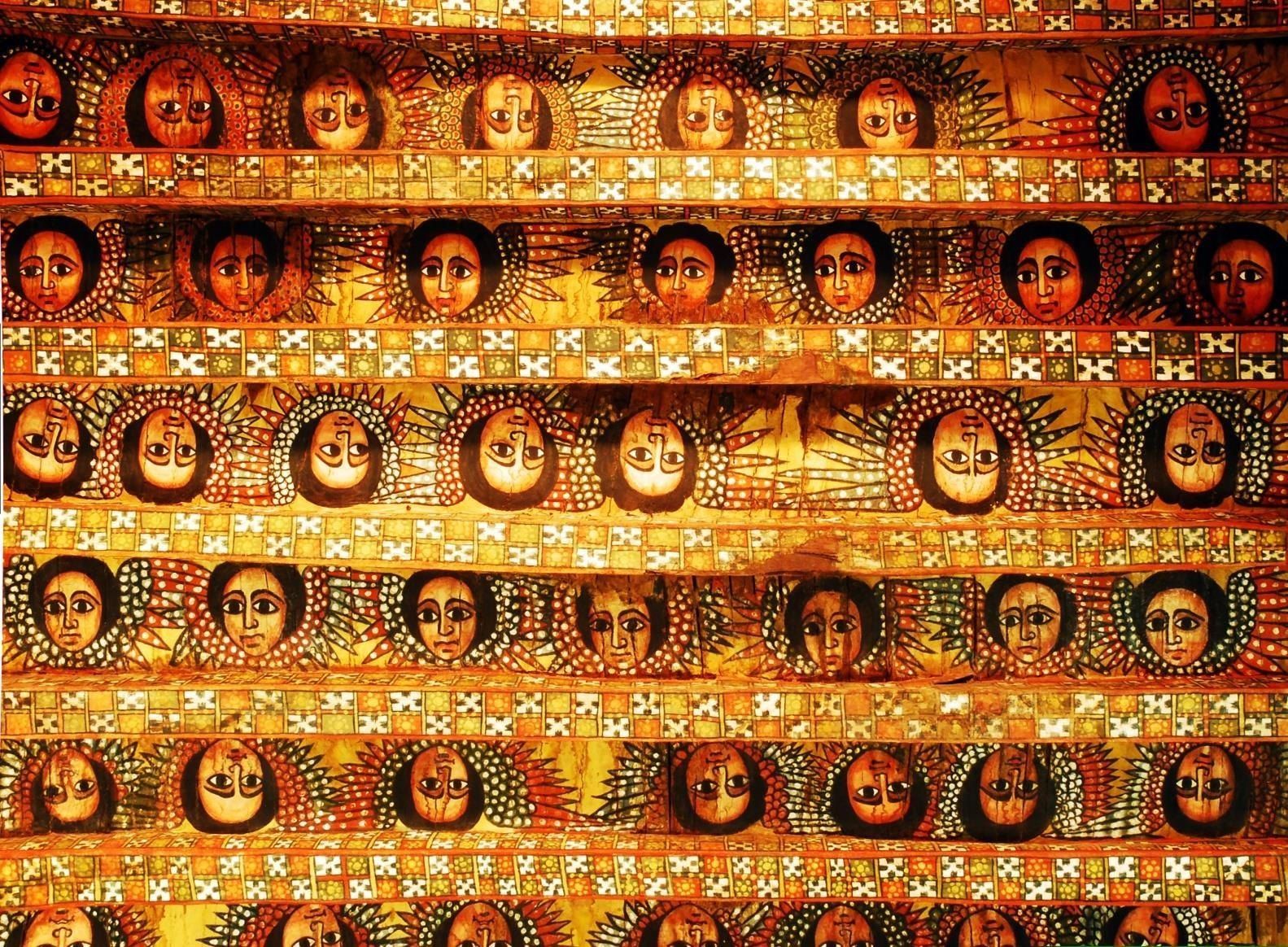
Total driving distance 185kms/3hrs. Today after breakfast drive to Gondar city enjoying the scenic view on the way & the local houses. Gondar “the Camelot of Africa,” is the medieval royal city, distinguished by its castles and imperial compound and by its churches, particularly Debre Berhan Selassie, the walls and ceiling of which are completely covered in murals - the angels’ faces on the ceiling have become a common motif in Ethiopian design. And after lunch you will have sightseeing in Gondar. Gondar was founded by Emperor Fasiladas in 1636 as the royal capital of Ethiopia. For several centuries Ethiopia had been ruled from a succession of temporary capitals and Fasiladas recognized that a permanent capital might help provide greater internal stability. By the time of Fasiladas' death in 1667 Gondar was the largest and most important city in the empire. It retained its position as the capital of Ethiopia for 250 years, though this status was largely nominal from the late 18th century onwards.
Gondar has now become one of Ethiopia’s largest and most impressive cities, with its walled Royal Enclosure. Gondar’s most famous monuments are its exceptionally well-preserved 17th-century castles. The largest and best is that of King Fasilidas. It is a stone-built construction with round turrets and wooden balconies. The king also built a remarkable bath a mile or so outside of town known as the ‘Pavilion of Delight’. The Bathhouse of Fasil at which thousands of Ethiopians celebrate Timekat festival every January. This whole complex of buildings is unique in Ethiopia and unlike anything found elsewhere in Africa. Visit the Royal Enclosure or Fasil Gibbi, encompasses the castles of various Gondarene emperors. The Fasiladas Palace; the Quskuam Church (believed to be the home of famous explorer James Bruce during the 1770’s). After 2-km drive from the town centre visit the bath of King Fasilides. The pool is now the central stage on which the Timkat or Epiphany festival is celebrated in Gondar.
Debre Berhane Selassie church with its remarkable walls and ceiling completely covered with murals - the angels’ faces on the ceiling have become a common motif in Ethiopian design. Tonight, you will have a family dinner mostly Ethiopian local foods prepared with the help of the group participation, like in shopping at local palaces, cooking… serving…. We can cook varieties of organic fresh foods from the market. We include halal foods, cooked vegetables….
Overnight: Haile Resort Gondar · Meals: Full Board
Day 4: Excursion to Simien Mountains
A day trip to the Simien Mts In early morning leave your hotel and head to the magnificent Simien Mts. National Park via Gondar. Road/ Surface transfer 210kms/2hrs.
The Simien Mts. dramatic topography resulted from the volcanic activity, ascribed it as the world natural heritage site, graced by exceptional botanical phenomena and a zoo of wild life Walia Ibex, Red fox, and Chilada/ bleeding heart Baboons are few to site. Visit Sankaber the first camp sight of the Simien Mts. Here you will find one of the most spectacular mountain sceneries in Ethiopia. Stop to watch Ghelada Baboons and observe their foraging habits, and take a short walk to a waterfall (the ground here is uneven). Picnic lunch at a scenic pot can be arranged Visit
and drive back to Gondar
Overnight: Haile Resort Gondar · Meals: Full Board
Day 5: Fly Gondar to Lalibela
Following your breakfast transfer to the airport for your flight to Lalibela. Drive to the city which takes ~40 minute from the airport, check-in to your hotel and you will start to explore Lalibela. The small town of Lalibela, which is home to one of the world's most astounding sacred sites, comprising eleven medieval rock-hewn churches, each carved entirely out of a single piece of stone. Lalibela, the’’New Jerusalem”, was built by King Lalibela with the help of angels” in the 12th century, and is a UNESCO World Heritage Site with its eleven rock-hewn churches. The rock-hewn churches are large and several are more than ten metres high. Because they are carved below ground level, they are ringed by trenches and courtyards, the sides of which are cut into with stone graves and hermit cells, and connected to each other by a tangled maze of tunnels and passages.
The eleven rock churches, thought to be at least 200 years old, are divided into two groups and are visited by foot. The steps are uneven and walking around can require a little agility.
You will visit the magnificent rock-hewn churches of Lalibela, which are called the “Eighth Wonder of the World.” These churches were hand-hewn out of solid rock between 800 - 1200 AD and are still active worship places. After lunch leave to visit the north-west cluster of churches consists of Bet Medhane Alem, Bet Maryam, Bet Meskel, Bet Danaghel, Bet Debre Sina, and Bet Golgotha. Also included in this tour is the isolated monolith of Bet Giyorgis (the Church of St George). Bet Medhane Alem is the largest monolithic rock-hewn church Take a part in a traditional coffee ceremony. Ethiopia's coffee ceremony is an integral part of the social and cultural life. It is an important cultural ritual that's been passed from generation to generation. An invitation to attend a coffee ceremony is considered as a mark of friendship or respect and is an example of Ethiopian hospitality.
Overnight: Mezena Lodge · Meals: Full Board
Day 6: Lalibela
Today visit the cave church of Yimrehane Kirstos, 40kms from the city, built by the king of the same name before the reign of King Lalibela. The church is constructed inside a cave, in Axumite style, similar to the church at Debre Damo, with alternating levels of wood and stone. If the day meets, attend the yearly celebration of King & Saint Yimrehane Kirstos which is attended by tens thousands of pilgrims from all over Ethiopia, making it one of the most joyous annual pilgrimages in Lalibela. It is celebrated with greater devotion, the congregation wrapped in white shawls sing with joy along with the priests’ one after the other and among the swaying choir the priests chanting, dancing, and singing around the church letting out a deep boom of the drums and female’s voice respond in a piercing chorus of ululations. Then return back to the town.
Overnight: Mezena Lodge · Meals: Full Board
Day 7: Fly Lalibela – Addis Ababa
You will be transferred to the airport for your flight back to Addis. Upon arrival, you will be transferred to your hotel. City tour of Addis may follow if you haven’t visited the first day or else you will rest at your hotel to get ready for the following Omo Valley visit.
Overnight: Ramada Addis
Day 8: Fly Addis Ababa – Jinka
Today, transfer to the airport for your ET flight to Jinka. Upon arrival, continue to drive to the Jinka city, which you will have en route visit the Ari people of Ethiopia are said to be one of the most culturally and economically dominant groups in the Omo valley. They currently live in a clan structure, but actually used to live independently until the late 19th century when they were conquered and unified as part of the Ethiopian empire. Their territories are divided into nine independent units, each with its own leader and a traditional spiritual leader known as Babi.
Like most other Omo Valley Tribes, Ari men are allowed to marry as many women as they want as long as they can provide for their families. However, this practice is becoming relegated as the Ari people embrace Christianity and polygamy becomes less common. Today, most Ari men have only one wife. Visit the South Omo Research Museum & local villages in Jinka and get acquainted to the local life, how they make local liquor made of Sorghum, Garlic and maize and how they make a pot.
Overnight: Eco Omo Lodge · Meals: Full Board
Day 9: Drive Jinka – Mursi – Turmi
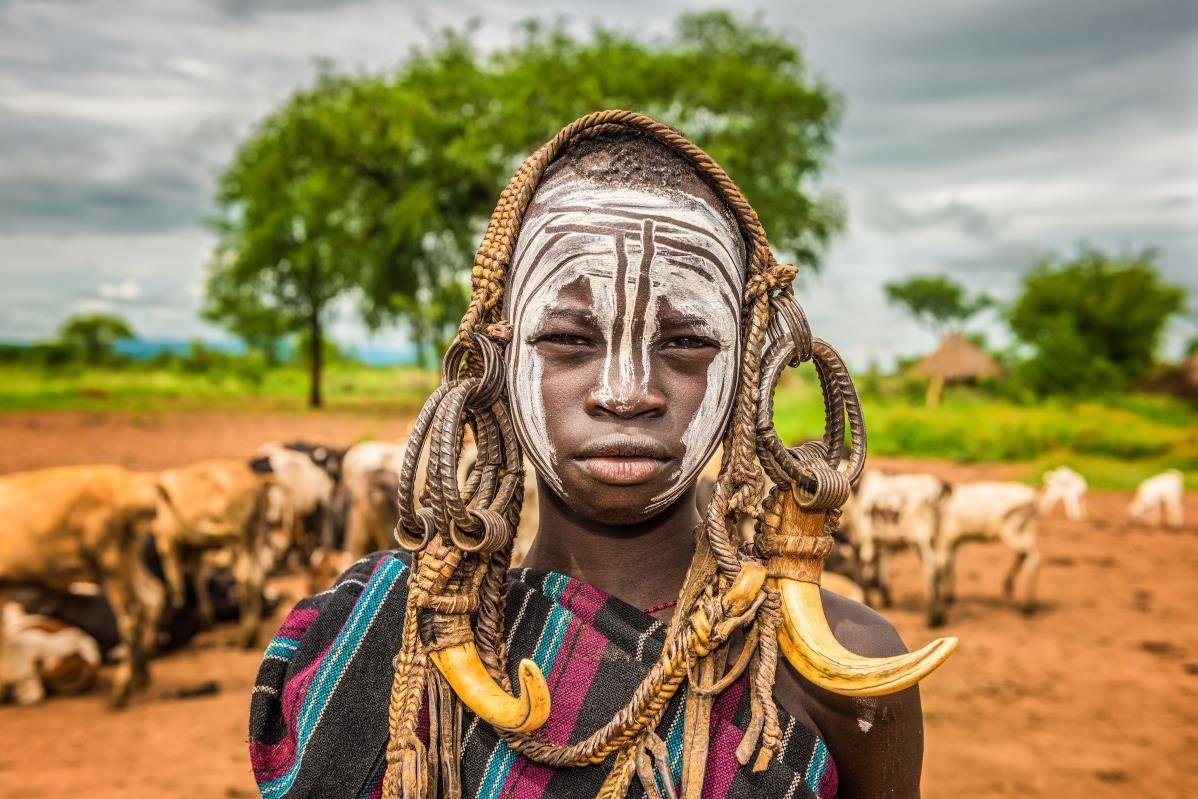
Total driving distance 230kms/6-7hrs. Take a day excursion to Mago National Park to visit the Mursi village. The Mursi are one of the most original ethnic groups. They live in very low huts made of straw leaves. The women like to wear terra cotta on their enormously stretched lower lips and ear lobes. The men are famous for their hairstyles. They go in for body scarification and among the women the wearing of lip plates. The larger the lip plate, the greater the woman’s value when she is married. She removes her plate for eating and sleeping. They are easily distinguished by how their long, distended lips hang down from their mouths. Visit and drive to Turmi.
Turmi is a place for the Hamer tribes, visit the Hamer village they are a fine-looking people, both men and women take great pride in their appearance, shaving and coloring their hair, oiling their bodies and decorating themselves with beads and bracelets worn around arms and legs. They are famous for their body decoration, moonlight dance (Evangedi Dance) and bull-jumping. Bull jumping marks the rite of passage from childhood to adulthood. It is not a done every day.
Overnight: Buska Lodge · Meals: Full Board
Day 10: Drive Turmi – Karo – Turmi
Total driving distance 150kms/3-4hrs. Following your early breakfast and you will venture to Murulle holding your picnic lunch to visit the Karo people, who reside along the banks of the Lower Omo River. The Karo incorporate rich cultural symbolism into their rituals and use ornate body art, intricate headdress, and body scarification to emphasize beauty and status within their community. This small but lively tribe numbers under 1,000, but they are the main non-nomadic agriculturalist group in the Lower Omo Valley. The Karo are differentiated from neighboring tribes by placing higher emphasis on body and face painting. They paint themselves daily with colored ochre, white chalk, yellow mineral rock, charcoal, and pulverized iron ore - all resources found in this area.
Karo body painting is a deep aspect of their culture; they are communicating as well as decorating. The experience of visiting the people of this incredibly rich, proud, yet adapting culture gives amazing insight into Ethiopia’s indigenous peoples. After the visit, you will drive to Turmi.
Overnight: Buska Lodge · Meals: Full Board
Day 11: Drive Turmi – Arbaminch
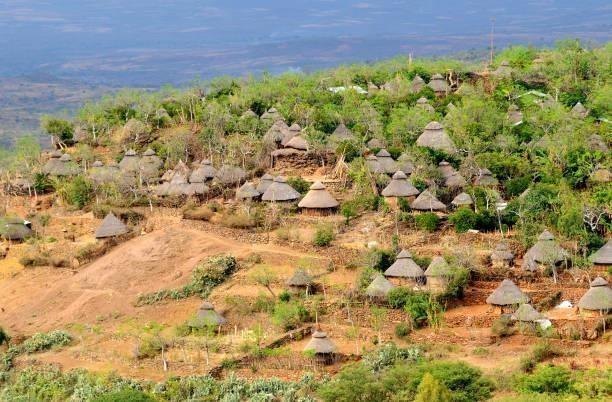
Total driving distance 280kms/5-6hrs. Following breakfast drive to Erbore village to say hello to the beautiful women of Arbore tribe with their black veils, but are half nude and head shaved, so the contrast is really amazing. Arbore / Erbore, is far more rustic and unaffected than many similarly size towns in south Omo, in common with their linguistically and culturally affiliated Tsemai neighbours, the Arbore migrated to their present homeland from Konso perhaps two centuries ago. Then make a drive to the Konso village to visit the majestic landscape and the way of their living; whose people are known for their intricately terraced hillsides, they make recognized and prized by UNESCO, fine woven materials and the carved totems with which they decorate their graves. The vast and majestic landscape provides a stunning backdrop for the unique Konso culture. Konso villages, known as kantas, are built into the hillsides and encircled with stone walls for protection. The winding paths that weave through the village all lead to the mora, a large, thatched pavilion which acts as a special meeting place for the people of the surrounding villages. The Konso culture has much to offer visitors. From cultural performances to handcraft demonstrations, visitors can learn about the traditions of the Konso people and the important roles these traditions still play in their lives.
Overnight: Haile Resorts · Meals: Full Board
Day 12: Fly Arbaminch – Addis Ababa
Following breakfast detour visit the home of the Dorze people at Chencha, 40kms from the city. The Dorze are renowned cotton weavers whose tall beehive-shaped dwellings are among the most distinctive traditional structures to be seen anywhere in Africa. The main occupations of the region are subsistence farming and weaving. The Shama cloth produced around Chencha is regarded to be the finest in Ethiopia: Plain white Gabbi robes and brightly colored scarf-like Netalas are sold along the roadside. Explore the local Dorze market decorated with many colours. Then transfer to Arba Minch airport for your flight back to Addis Ababa in the afternoon. Later, at night you will have a farewell dinner in a cultural restaurant serving the unique Ethiopian cuisine accompanied by traditional music and dancing.
Overnight: Ramada Hotel · Meals: Full Board
Day 13: A Day in Addis and Departure
You will have a day in Addis before leaving Ethiopia. Visit to Entoto Hills – best introduction place to Addis Ababa. Mt. Entoto is the highest peak in Addis Ababa reaching 3,200 meters above sea level, giving the opportunity to catch stunning views over the city and the surrounding area from the summit. It is the first settlement in Addis Ababa where Emperor Menelik II resided and built his palace in 1887. It is a historical place which offers a unique glimpse into the history of Ethiopia’s distinct culture. The compound at the peak hosts the Entoto Mariam church, an Ethiopian artefact museum as well as Menelik II palace.
In addition to its historical significance as one drive up the hill there is an appreciable drop in temperature and the air is filled with the scent of the Eucalyptus trees which line the road. On the way up the roadside stalls offers fresh Ethiopian coffee. Also, if you have an interest in Ethiopian traditional clothes stop by at Shero Meda Market. There is a wide variety of beautiful fabrics, shawls, scarves, dresses, tops and jewellery with lots of choice and really good for gift ideas. Transfer to the airport for your departure flight. Many thanks & have a safe flight.
End of Services
Prices (US$ per person)
| Per person basis | Package cost per person (room sharing) |
|---|---|
| 2 pax - one 4x4 (Omo Valley) + minivan | US$ 4,323 |
| 4 pax - two 4x4s + minivan | US$ 3,612 |
| 6 pax - two 4x4s + minivan | US$ 3,234 |
| 8 pax - three 4x4s + minivan | US$ 3,167 |
| 10 pax - three 4x4s + coaster bus | US$ 3,045 |
| 12 pax - four 4x4s + coaster bus | US$ 3,039 |
| 14 pax - four 4x4s + coaster bus | US$ 2,939 |
| 16 pax - five 4x4s + coaster bus | US$ 2,945 |
| Single room supplement (per person) | US$ 384 |
| Holiday supplement (per person) | US$ 278 |
| Additional charges (added to the package price) | Price |
|---|---|
| Domestic flights - arriving on Ethiopian Airlines international flights | US$ 606 |
| Domestic flights - not using Ethiopian Airlines international flights | US$ 862 |
Package cost per person for the above program based on room sharing. Vehicles: 4x4 vehicle(s) for the Omo Valley; minivan (2-8 pax) or coaster bus (10-16 pax) in Addis, Bahir Dar, Gondar, Simien Mountains and Lalibela.
Domestic flights: Addis Ababa - Bahir Dar // Gondar - Lalibela - Addis Ababa - Jinka // Arba Minch - Addis Ababa. Clients flying to Ethiopia with Ethiopian Airlines get a reasonable discount on domestic fares. To be revised if any fare difference is observed at the time of travel.
Bull jumping or similar activities supplement - TBA.
Terms and Conditions apply.
Included in the price
- Accommodation: all accommodation as detailed on a sharing basis with private facilities
- Meals/Beverages: breakfasts, lunch and dinner with one bottle of water as stated in the itinerary; soft drink and bottled water in the vehicle
- Transfers/Transport: airport welcome, assistance with luggage, and transportation by air-conditioned, comfortable, spacious vehicles, complete with bottled water
- Sightseeing: English speaking guide throughout the trip and local guides at each destination
- Entrance fees: all entrance fees as per the program
- Local taxes: all necessary local government taxes
- Porterage fees at the airport and hotels
- Boat cruise on Lake Chamo and Lake Tana
- Coffee ceremony and honey wine drinks (Tej)
- Traditional farewell dinner in Addis Ababa
Excluded
- Visa for Ethiopia
- International & domestic airfare (domestic flight fare is quoted separately - see add-on charges)
- Tipping
- Early check-in
- Alcoholic beverages
- Insurance coverage of personal loss, injury, illness or damages incurred during your trip - we strongly recommend travel/cancellation insurance
- Personal expenses: items of a purely personal nature such as drinks (unless noted), laundry, dry cleaning, internet, fax or telephone charges, and transfers/sightseeing or meals not included above
- Excess baggage charge
Tour details
- Dates: 2025
- Accommodation: 4* star hotel in Addis and best available outside of Addis
- Transport: internal flights & surface transport
- Guide: an accompanying English-speaking national guide (multi-lingual upon request)
Baggage allowance
Domestic flights: a strict luggage restriction of 20kgs per person and hand luggage applies to all light aircraft flights within Ethiopia. It is important that you carry soft-sided or “barrel” bags, as hard-sided suitcases (Samsonite-style) cannot be fitted into the small holds of light aircraft if you use the charter flights on this program.
Excess baggage: may be safely stored at the hotel in Addis Ababa.
All bookings are subject to our Terms & Conditions.